Hubungi Kami

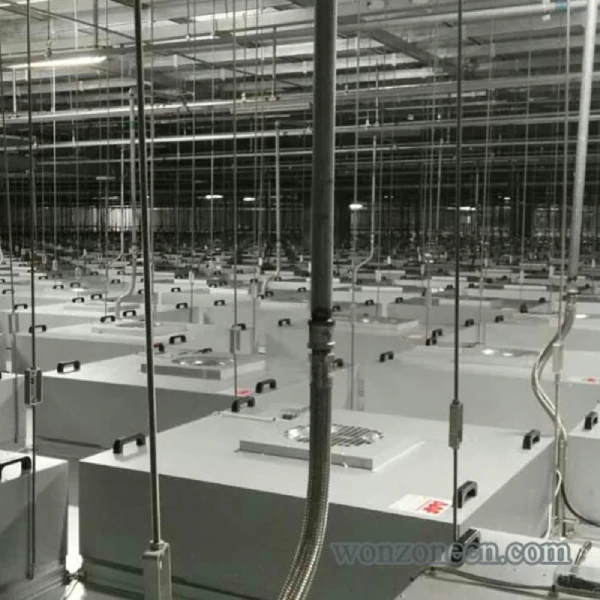
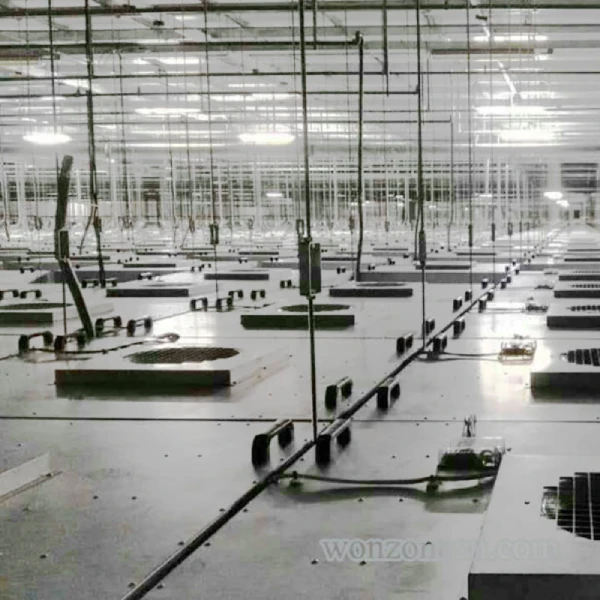
Unit Filter Kipas (FFU)
Gambaran keseluruhan:
FFU, singkatan dari Fan Filter Unit, adalah perangkat pemurnian udara yang mengintegrasikan kipas dan filter efisiensi tinggi menjadi satu unit. FFU biasanya dipasang di jaringan langit-langit ruang bersih, berfungsi sebagai unit pasokan udara terminal yang memberikan udara bersih yang disaring efisiensi tinggi ke lingkungan ruang bersih. FFU adalah salah satu komponen peralatan inti di ruang bersih modern, yang banyak digunakan dalam industri dengan persyaratan kebersihan udara yang ketat, termasuk farmasi, bioteknologi, manufaktur semikonduktor, produksi elektronik, rumah sakit, dan pengolahan makanan.
Kata kunci:
Detail:
1. Product Overview
FFU, short for Fan Filter Unit, is an air purification device that integrates a fan and a high-efficiency filter into a single unit. FFUs are typically installed in the ceiling grid of cleanrooms, serving as terminal air supply units that deliver high-efficiency filtered clean air into the cleanroom environment.
The FFU is one of the core equipment components in modern cleanrooms, widely used in industries with strict air cleanliness requirements, including pharmaceuticals, biotechnology, semiconductor manufacturing, electronics production, hospitals, and food processing.
2. Working Principle
The working principle of an FFU can be summarized in three stages: fan-driven air intake, filtration and purification, and uniform air supply.
First, Fan-Driven Air Intake. The internal fan of the FFU draws air from the ceiling return plenum or static pressure chamber above the cleanroom.
Second, Filtration and Purification. The air passes through the built-in high-efficiency filter (HEPA, High Efficiency Particulate Air Filter) or ultra-low penetration filter (ULPA, Ultra Low Penetration Air Filter), where airborne particles, bacteria, dust, and other contaminants are effectively captured.
Third, Uniform Air Supply. The filtered clean air is evenly delivered into the cleanroom through the FFU outlet, creating either unidirectional or non-unidirectional airflow patterns to maintain the required cleanliness level.
Depending on the filter efficiency selected, FFUs can achieve cleanroom environments ranging from ISO Class 5 to ISO Class 8.
3. Product Structure and Components
An FFU consists of the following core components:
Fan: Typically a high-efficiency centrifugal fan or EC fan, characterized by low noise, low energy consumption, and adjustable airflow capacity.
High-Efficiency Filter: Includes HEPA filters (99.97% or higher efficiency for 0.3 micron particles) and ULPA filters (99.999% or higher efficiency for 0.12 micron particles).
Housing: Generally manufactured from galvanized steel sheet, stainless steel sheet, or aluminum alloy, providing good airtightness and structural strength.
Perforated Face Plate / Diffuser: Installed at the FFU outlet to ensure even distribution of supplied air.
Control Unit: Includes speed controller, differential pressure alarm device, and remote monitoring interface, enabling local or centralized control of FFUs.
Sealing Device: Includes sealing gaskets and sealing tapes to ensure a tight seal between the FFU and the ceiling grid frame, preventing unfiltered air from leaking into the cleanroom.
4. Features and Advantages
First, Modular Design. FFUs adopt standardized module dimensions, allowing flexible quantity configuration based on cleanroom area. They are easy to install and remove, facilitating cleanroom renovation and expansion.
Second, Independent Control. Each FFU can be independently controlled for start/stop and airflow speed, enabling demand-based air supply according to the actual requirements of different zones, thereby saving energy.
Third, Low Operating Noise. Utilizing low-noise fans and optimized airflow path designs, FFUs operate at low noise levels, making them suitable for laboratories and production environments with strict noise requirements.
Fourth, High Filtration Efficiency. Equipped with HEPA or ULPA filters, FFUs effectively remove microscopic airborne particles, ensuring cleanroom air quality.
Fifth, Easy Maintenance. Filter replacement is simple, and the fan unit can be serviced from above or below the ceiling without disrupting normal cleanroom operations.
Sixth, Energy Efficiency and Environmental Friendliness. EC fan technology offers low energy consumption, and speed can be adjusted according to actual demand, reducing unnecessary energy waste.
5. Technical Specifications (Standard)
Fan Type: Centrifugal fan or EC fan
Power Supply: AC220V 50Hz or AC380V 50Hz
Standard Dimensions: Typically 1175mm × 575mm or 1175mm × 1175mm, can also be customized based on ceiling grid dimensions
HEPA Filtration Efficiency: 99.97% or higher for 0.3 micron particles
ULPA Filtration Efficiency: 99.999% or higher for 0.12 micron particles
Rated Airflow: 500 to 2000 cubic meters per hour (varies by size and model)
External Static Pressure: 50 to 250 Pascals (adjustable)
Noise Level: Less than 55 dB(A)
Housing Material: Galvanized steel sheet, stainless steel sheet, or aluminum alloy
Control Method: Five-speed adjustment, stepless speed adjustment, or centralized control system
Operating Temperature: 0 to 40 degrees Celsius
Operating Humidity: Less than 95% relative humidity
6. Product Classification
Standard FFU: Utilizes AC fans or multi-speed DC fans, suitable for conventional cleanroom environments.
EC FFU: Utilizes EC fans (Electronically Commutated fans), offering higher energy efficiency and more precise speed control, ideal for applications requiring energy savings and accurate control.
Low-Noise FFU: Features special noise reduction design, operating at even lower noise levels, suitable for noise-sensitive environments such as laboratories and hospitals.
Corrosion-Resistant FFU: Housing and fan manufactured from corrosion-resistant materials, suitable for cleanroom environments with corrosive gases or chemicals.
Explosion-Proof FFU: Equipped with explosion-proof motor and electrical components, suitable for special cleanroom environments with flammable or explosive gases.
Ceiling-Mounted FFU: Standard installation type, recessed into ceiling grid.
Wall-Mounted FFU: Installed on walls, suitable for space-constrained areas or special airflow pattern requirements.
7. Application Areas
FFUs are widely used in various locations with strict air cleanliness requirements.
Pharmaceutical Industry: Used in drug production workshops, sterile preparation workshops, API purification and packaging workshops, complying with GMP requirements. FFUs provide ISO Class 5 to Class 8 cleanroom environments, ensuring air quality during pharmaceutical production.
Biotechnology and Life Sciences: Used in biological laboratories, cell culture rooms, genetic laboratories, etc., preventing airborne microorganisms and particles from contaminating experimental samples.
Semiconductor and Electronics Manufacturing: Used in chip fabrication, wafer processing, LCD panel production, precision electronic component assembly, etc. The semiconductor industry requires extremely high cleanliness levels, typically ISO Class 1 to Class 5, and FFUs are key equipment for achieving this.
Hospitals and Medical Facilities: Used in operating rooms, ICU wards, sterile treatment rooms, central sterile supply departments, etc. FFUs provide clean air to reduce patient infection risks.
Food and Beverage Processing: Used in food packaging workshops, dairy filling lines, beverage production workshops, etc., preventing airborne microorganisms from contaminating food products.
Precision Instruments and Optics Manufacturing: Used in lens assembly, precision instrument calibration, optical coating, and other processes requiring high environmental cleanliness.
Laboratories and R&D Centers: Used in chemical laboratories, physics laboratories, materials science laboratories, etc., protecting experimental samples and precision instruments from airborne particle interference.
Data Centers and Computer Rooms: Used in server rooms, telecommunications rooms, etc. FFUs help maintain the clean environment and appropriate temperature required for equipment operation.
Aerospace and Defense: Used in spacecraft assembly, precision navigation equipment manufacturing, weapons system maintenance, and other applications with special cleanliness requirements.
Animal Housing Facilities: Used in SPF animal rooms, laboratory animal centers, etc., preventing airborne pathogens from entering animal housing areas.
8. Comparison with Other Cleanroom Equipment
FFU vs. Central HVAC System: Traditional central HVAC systems supply air to cleanrooms through centralized air handling units and long ductwork, resulting in high resistance, high energy consumption, and difficulty in independently adjusting airflow for different zones. FFUs use distributed air supply, with each unit independently controlled, offering high flexibility and significant energy savings.
FFU vs. Fan Filter Box: Fan filter boxes are typically larger in size, installed outside the cleanroom, and connected to terminal air supply devices through ducts. FFUs are compact and mounted directly on the ceiling, saving space and offering easier installation and maintenance.
FFU vs. High-Efficiency Air Supply Diffuser: High-efficiency air supply diffusers do not have an integrated fan and rely on external fans for air supply power. FFUs have their own built-in fan, do not depend on external air pressure, and offer more flexible installation, especially suitable for renovation projects and establishing localized clean zones.
9. Selection Guide
Cleanliness Requirement: Select the appropriate filter type based on the required ISO cleanliness class. For ISO Class 5 and above, choose HEPA or ULPA filters. For ISO Class 6 and below, medium-efficiency filters may be suitable.
Cleanroom Area and Height: Calculate the required number of FFUs based on total cleanroom area and ceiling height. Typically, 0.5 to 1 standard-sized FFU is configured per square meter, with the exact quantity determined by the required air change rate.
Airflow Pattern: Unidirectional flow cleanrooms require dense FFU arrangement to achieve uniform vertical laminar flow. Non-unidirectional flow cleanrooms can use fewer FFUs, supplemented by return air columns or return air walls.
Noise Requirements: For noise-sensitive environments such as hospital wards and laboratories, select low-noise FFUs and pay attention to overall installation sound insulation.
Control Method: Choose local speed control or centralized control system. Large cleanrooms are recommended to use centralized control systems for unified management and energy monitoring.
Maintenance Convenience: Consider the ease of filter replacement. Select FFU models that can be serviced from inside the cleanroom or from above the ceiling.
Installation Conditions: Verify that the ceiling structure can support the weight of the FFUs and that sufficient overhead space is available for installation and maintenance.
Budget and Energy Consumption: EC FFUs have higher initial investment but lower operating energy costs. AC FFUs have lower initial cost but higher long-term energy consumption. Consider both factors based on project duration and budget.
10. Installation and Maintenance
Installation Key Points: Before installation, check that the ceiling grid is secure and level. Install FFU support frames on the grid, ensuring they are level. Place the FFU into the frame, achieving a tight seal with the frame using sealing gaskets. Connect power and control cables, ensuring proper grounding. Install the perforated face plate or diffuser. Power on for testing, checking fan operation status and speed adjustment functionality.
Daily Maintenance: Regularly check FFU operating status, including airflow speed, noise, and vibration. Observe the differential pressure indicator and replace the filter promptly when the pressure drop reaches the replacement value. Clean the intake and outlet grilles of the FFU. Inspect sealing gaskets for aging or damage. Periodically conduct airflow speed tests and filter integrity tests (PAO leak testing) on FFUs.
Filter Replacement Procedure: Turn off FFU power. Access the service panel from above or below the ceiling. Remove the old filter. Clean the filter mounting frame. Install the new filter, ensuring proper sealing. Restore power and test operating status.
Common Troubleshooting: If the fan does not operate, check power connections, fuses, and control switches. If airflow is insufficient, check whether the filter is clogged or the fan speed setting is too low. If noise is excessive, check whether the fan impeller is balanced or if foreign objects have entered. If vibration is excessive, check whether the fan mounting screws are loose.
Pertanyaan yang Sering Ditanyakan
1
Industri apa yang menggunakan FFU?
Garis produksi semikonduktor (sensitif partikel), laboratorium penelitian biomedis, manufaktur farmasi, dan lingkungan yang dikendalikan yang membutuhkan aliran udara, kecepatan, dan kontrol tingkat kebisingan yang tepat.
2
Apa itu Fan Filter Unit (FFU)?
FFU adalah perangkat pemurnian udara modular yang menggabungkan kipas dengan filter HEPA atau ULPA dalam satu perumahan. Ini menyediakan pasokan udara bersih lokal dan sangat penting untuk kontrol kontaminasi ruang bersih.